Why Do Solar Batteries Perform Worse in Cold Weather?

Time:2026-10-03 Author:Henry
0%

Why do solar batteries perform worse in cold weather? The short answer involves chemistry, resistance, and charging limits—not simply “low temperature equals failure.” Most modern home systems use lithium-ion cells. As temperatures fall, lithium ions move more slowly through the electrolyte. That slowdown raises internal resistance, reduces available power, and can make the battery appear to lose capacity. On a frosty morning, a battery may show a lower state of charge than expected, especially under heavy loads. An electric heater or heat pump can expose this weakness quickly.

Cold weather also changes what the battery safely accepts. Many battery-management systems restrict charging below a specified temperature to reduce lithium plating and long-term damage. Discharging may remain possible, but performance can still decline. Manufacturer limits matter more than generic advice. Installers often check enclosure temperature, insulation, ventilation, and heating controls before blaming the battery. Data from a winter monitoring period can reveal whether the problem is temperature, aging, poor settings, or excessive demand. The explanation is not perfectly simple. Different chemistries behave differently, and shaded equipment may create colder conditions than expected. There are exceptions. Even so, the evidence is practical: colder cells usually deliver less usable energy and need more careful charging. That distinction matters. This article examines the science, real-world symptoms, and safer ways to interpret winter battery performance without promising a one-size-fits-all fix.
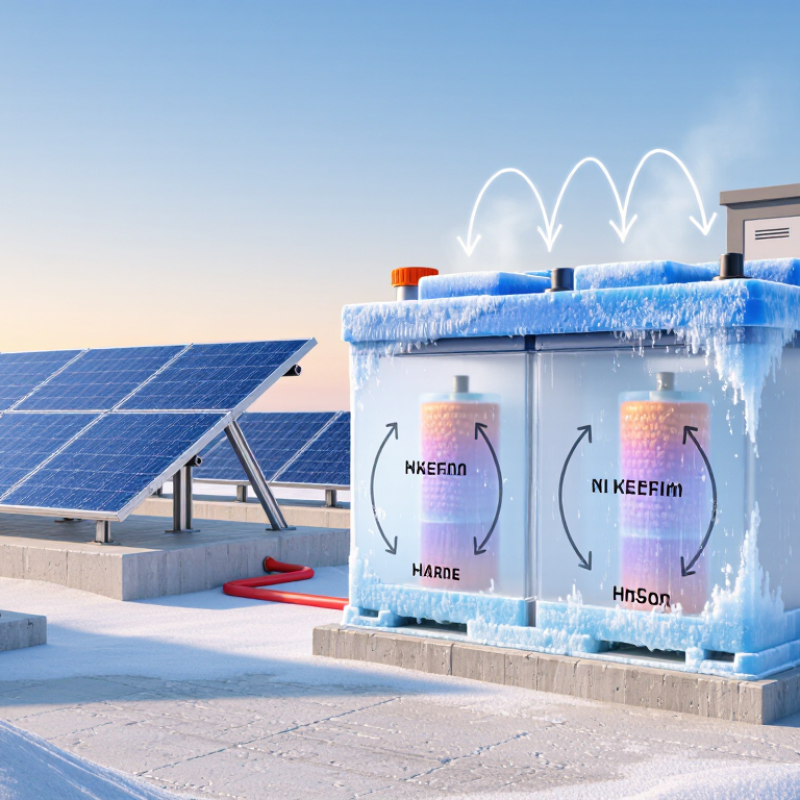
Why Do Solar Batteries Perform Worse in Cold Weather?

How Solar Batteries Store and Release Energy

Why Do Solar Batteries Perform Worse in Cold Weather?

A solar battery does not store electricity as a tank stores water. It stores energy through reversible chemical reactions inside its cells. During charging, solar power pushes ions through an electrolyte toward the negative electrode. During discharge, those ions move back and release electrical energy through an external circuit.

Cold weather slows this movement. The electrolyte becomes less active, while internal resistance increases. The battery may then accept energy more slowly and deliver less power. In practical testing, a battery can show a lower capacity on a freezing morning, even when its stored energy has not disappeared. That difference matters. A household might see reduced output during breakfast, when lights and heating equipment start together.

The battery management system usually responds by limiting charging or discharge. This protects the cells from damage, especially when charging below the recommended temperature. A warm enclosure can help, but insulation alone cannot create heat. Some systems use small heaters powered by stored energy, which creates an awkward trade-off. The battery protects itself by using some of its own power.

The simple explanation is useful, but incomplete. Cell chemistry, state of charge, age, cable resistance, and temperature sensors also affect performance. A battery at 5°C may behave very differently from one at -10°C. Check temperature readings, allow gradual warming, and avoid assuming the displayed percentage equals usable energy. Real systems are less tidy.

How Cold Temperatures Affect Battery Chemistry

Cold weather changes battery chemistry, not merely its displayed capacity. Inside a rechargeable cell, ions move more slowly as temperature falls. Electrolyte conductivity decreases, while internal resistance rises. The battery may still show a healthy voltage. However, voltage can collapse when a heavy load starts. This explains why a solar system may deliver less usable energy on a frosty morning. The chemistry is slower.

Charging creates a separate concern. In lithium-based cells, cold charging can cause metallic lithium to form on the anode surface. This process, called lithium plating, may permanently reduce capacity or create safety risks. Battery management systems often restrict charging or reduce current below a safe temperature. Lead-acid batteries respond differently, but cold still slows reactions and reduces available capacity. Rules can mislead. Cell design, charge current, and state of charge also matter.

In practical installations, insulated enclosures and temperature sensors can improve winter performance. Low-temperature charging limits should follow the battery’s technical documentation. For lithium systems, controlled warming before charging is often safer than forcing current into a frozen cell. During winter checks, compare battery temperature, charging current, and inverter output instead of trusting voltage alone. This comparison can reveal the real bottleneck. It is easy to blame weak sunlight, but the battery may be limiting the system. Even careful recommendations need review when local temperatures change sharply.

Why Do Solar Batteries Perform Worse in Cold Weather?

How cold temperatures affect lithium-ion battery chemistry

Cold temperatures slow the movement of lithium ions through the electrolyte and increase internal resistance. As a result, a lithium-ion battery can deliver less usable capacity and lower power in cold conditions. The values shown are representative available-capacity levels normalized to 100% at 25°C; actual results vary by battery chemistry, discharge rate, state of charge, and thermal management.

Why Battery Capacity Drops in Cold Weather

Solar batteries often deliver less energy during cold weather, even when their displayed charge looks normal. The main issue is reduced usable capacity, not necessarily permanent battery damage. In lithium-based cells, low temperatures slow ion movement through the electrolyte and across internal materials. This raises internal resistance and causes voltage to sag sooner under load. It is not empty. When voltage falls too quickly, the control system may stop discharge earlier to protect the cells. That safety limit makes the stored energy feel smaller. In practical terms, a battery rated for a certain capacity at room temperature may provide noticeably less energy at freezing temperatures. Cold changes the numbers.

Charging is more sensitive. Below freezing, charging lithium cells can cause lithium plating, which may reduce lifespan or create internal damage. For this reason, battery management systems commonly restrict charging or wait until the cells warm. That delay can be frustrating during a bright winter morning, when solar production begins before the battery is ready. Insulation, sheltered placement, and controlled heating can reduce the effect, but they also consume space or energy. Temperature sensors matter. An inaccurate sensor can trigger unnecessary limits or miss a genuine cold condition.

Field observations often reveal a confusing pattern: overnight storage seems to fall sharply, then improves after sunlight warms the enclosure. This usually reflects temporary resistance and protection limits rather than lost chemical capacity. Still, it is easy to overstate the recovery. Repeated cold charging, poor ventilation, or aging cells can leave lasting effects. Battery chemistry, insulation, and installation design all change the result. A datasheet value is only a reference. Real performance depends on temperature at the cells, not merely the outdoor forecast. I would measure morning voltage, charging limits, and usable output across several cold days before judging the system.

How Charging Performance Changes Below Freezing

Why Do Solar Batteries Perform Worse in Cold Weather?

How Charging Performance Changes Below Freezing

Below-freezing temperatures slow the chemical reactions inside lithium-ion cells. Charging becomes the harder task. A battery may still deliver power, but it often accepts energy more slowly. The U.S. Department of Energy’s Energy Storage Grand Challenge Roadmap identifies thermal management as a major storage-system requirement. Its guidance supports a practical point: temperature control directly affects usable performance and safety.

At 0°C, many battery-management systems begin limiting charging current. Below freezing, some systems stop charging completely. This protects the graphite anode from lithium plating, which can permanently reduce capacity. A 2014 Journal of Power Sources study by Waldmann and colleagues linked low-temperature charging with this degradation mechanism. Sandia National Laboratories’ Energy Storage Technology and Cost Characterization reports also treat operating temperature as a key performance variable. The exact limit differs by cell chemistry and system design.

A cold battery can look healthy, yet charge painfully slowly. Snow-covered panels may produce little energy, while the battery still needs warming. Insulated enclosures and controlled heaters can help, but they consume some stored electricity. That trade-off is easy to underestimate. Field installers should check the battery’s charging-temperature range, not only its advertised capacity. The common assumption that “more sunlight fixes winter performance” is incomplete. Sunlight may return before the battery is ready.

Why Do Solar Batteries Perform Worse in Cold Weather? - How Charging Performance Changes Below Freezing

Typical operating guidance for rechargeable battery systems used in solar energy storage

Battery Temperature Typical Charging Condition Charging Performance Recommended Charge Current Main Technical Effect Practical Solar-System Action
Below −20°C Do not charge lithium batteries Charge acceptance is extremely poor. The battery management system may disconnect charging completely. 0 A for lithium-ion and LiFePO4 batteries unless the battery manufacturer specifically permits charging. High risk of lithium plating, permanent capacity loss, increased internal resistance, and possible cell damage. Use an insulated enclosure, battery heater, or a temperature-controlled installation. Allow the battery to warm before charging.
−20°C to −10°C Charging normally prohibited Most lithium-based solar batteries cannot safely accept a normal charging current. 0 A for most LiFePO4 systems. Some lithium-ion systems may allow only specially controlled low-current charging. Cold lithium-ion cells receive lithium ions more slowly, increasing the chance that metallic lithium deposits on the anode. Prevent the charge controller from sending current until the battery temperature rises above its specified minimum.
−10°C to 0°C Usually blocked for LiFePO4 Charging efficiency falls sharply, and normal solar charging can be unsafe even when the battery still has usable discharge capacity. 0 A for most LiFePO4 batteries. Follow the exact battery temperature limits for other lithium chemistries. Discharge may remain possible, but charging below freezing can cause irreversible electrochemical damage. Configure low-temperature charge protection and use a heater powered by an approved external source or controlled auxiliary load.
0°C to 5°C Restricted or temperature-controlled charging Many LiFePO4 batteries still prohibit charging at this range. Lead-acid batteries can charge but accept energy more slowly. Use only the reduced current specified by the battery manufacturer. Do not assume the full rated solar charge current is safe. Higher internal resistance produces more voltage rise and less efficient energy storage. Allow the battery to warm naturally or use an integrated heater before applying substantial charging power.
5°C to 15°C Reduced charging performance Charging is generally more acceptable, but lithium batteries may still have reduced charge-rate limits compared with room temperature. Often below the maximum rated current; use the battery management system and charge-controller limits. Electrochemical reaction rates remain slower, causing higher resistance, longer charging time, and temporary capacity reduction. Expect less harvested solar energy during short winter days and avoid relying on the maximum nameplate charging rate.
15°C to 25°C Normal operating range Most rechargeable solar batteries deliver close to their specified charging performance. Use the manufacturer-rated current, provided voltage, temperature, and state-of-charge limits are respected. Moderate internal resistance and good ion mobility support efficient charging. Use this range as a practical reference for comparing cold-weather charging behavior.
Above 25°C Monitor high-temperature limits Charging may remain efficient, but excessive heat can accelerate battery aging and may also require current reduction. Reduce current when required by the battery management system or thermal specifications. Heat increases chemical side reactions, electrolyte degradation, and long-term capacity fade. Provide ventilation, shading, and temperature monitoring instead of treating warm conditions as always beneficial.
Important note: Exact temperature limits and charge-current reductions vary by battery chemistry, cell design, battery management system, and installation. The 0°C charging restriction is especially common for LiFePO4 batteries, while some other lithium-ion systems use different limits. Lead-acid batteries can generally be charged below freezing, but they require temperature-compensated voltage and may charge more slowly. Always use the battery manufacturer’s specified temperature limits and charge settings.

Ways to Improve Solar Battery Performance in Winter

Why Do Solar Batteries Perform Worse in Cold Weather?

Cold weather slows the chemical reactions inside solar batteries. Lithium-ion cells move energy less efficiently, so charging and discharging become slower. Internal resistance also rises, reducing available power during freezing mornings. Charging below the recommended temperature can permanently damage the cells.

Snow adds another challenge. Covered panels produce less electricity, leaving the battery partly charged. The battery may seem defective, although winter sunlight is the real problem.

Tips: Keep the battery in a dry, insulated, and ventilated enclosure. Avoid placing it directly on a cold concrete floor. Use a temperature sensor and approved heating controls when available. Charge only within the permitted temperature range. Clear snow from panels with a soft tool, not sharp equipment. Keep the battery moderately charged overnight, rather than draining it completely.

Good winter performance depends on both storage and energy planning. Shift flexible loads, such as water heating, into sunny hours. Keep essential backup circuits limited during long cloudy periods. Check cables, terminals, and warning readings regularly. A warmer battery is not always better. Excess insulation can trap heat during daytime charging. I have seen winter plans fail because they considered temperature but ignored ventilation. Review the system after several cold cycles. Real performance can differ from estimates.

FAQS

Why does a solar battery perform worse in cold weather?

Cold slows chemical reactions inside the cells. Internal resistance also rises. The battery may charge slowly and deliver less power.

Has the battery lost stored energy on a freezing morning?

Not necessarily. Some energy may remain temporarily unavailable. A displayed percentage does not always equal usable energy.

Can cold weather reduce household power during breakfast?

Yes. Lights, heating equipment, and appliances may start together. Reduced battery output can make this period feel noticeably weaker.

How does the battery management system respond to low temperatures?

It may limit charging or discharge. This protects the cells from damage. The restriction can feel inconvenient, but it is useful.

Can insulation keep a solar battery warm enough?

Insulation helps slow heat loss. It cannot create heat. Too much insulation may trap daytime heat and reduce ventilation.

Do built-in heaters solve winter battery problems?

Small heaters can warm the battery before charging. They may use stored energy. That creates a real trade-off.

Where should a solar battery be placed during winter?

Use a dry, insulated, and ventilated enclosure. Avoid direct contact with a cold concrete floor. Check temperature readings regularly.

What should users do when panels are covered with snow?

Remove snow with a soft tool. Avoid sharp equipment. Covered panels produce less electricity, so the battery may remain partly charged.

How can households plan energy use during long cloudy periods?

Run flexible loads during sunny hours. Limit essential backup circuits overnight. Keep the battery moderately charged instead of draining it completely.

Which details can make winter performance differ from estimates?

Cell chemistry, age, charge level, cables, and sensors all matter. A battery at 5°C may behave differently at -10°C. Real systems are less tidy.

Conclusion

Why do solar batteries perform worse in cold weather? The main reason is that low temperatures slow the chemical reactions that allow a battery to store and release electricity. When the battery becomes cold, ions move less efficiently through its internal materials, increasing resistance and reducing the amount of usable energy available. As a result, the battery may deliver power more slowly, reach its apparent full or empty level sooner, and provide less capacity than it would in moderate conditions.

Cold weather also affects charging performance, especially when temperatures fall below freezing. Charging too quickly in these conditions can place stress on the battery and may cause long-term damage, so many systems reduce or pause charging for protection. To improve winter performance, users can install batteries in an insulated, temperature-controlled location, protect them from moisture and extreme cold, and use a suitable battery management system. Keeping the battery within its recommended temperature range helps maintain efficiency, safety, and service life.

Henry

Henry

Henry is a dedicated marketing professional with a profound expertise in the company's offerings. With years of experience in the industry, he possesses an impressive understanding of the market dynamics and consumer behaviors that drive success. Henry is committed to sharing his insights through......