Access to reliable energy remains a significant challenge in rural areas. Many communities struggle with inconsistent power supplies. This gap hampers their development and well-being. Therefore, exploring effective rural power solutions is essential.
Sustainable energy systems can transform these regions. They provide essential services and enhance quality of life. Options range from solar panels to wind turbines. Each solution has specific benefits and challenges. Communities may find one solution suits their needs better than others.
Adopting these rural power solutions is not without difficulties. Initial costs can be high, and maintenance often requires expertise. Community involvement is crucial for successful implementation. Without local support, even the best solutions may fail. As we explore the top ten rural power solutions, consideration of these factors is necessary.
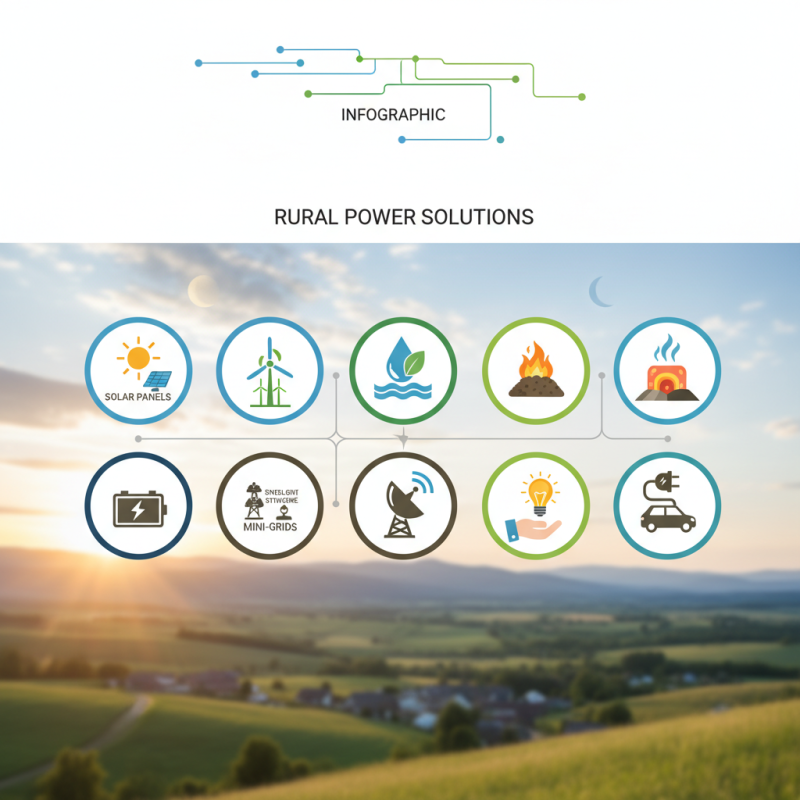
Rural areas face unique challenges regarding sustainable energy. Many regions lack reliable access to electricity. This situation limits economic growth and quality of life. A robust analysis of local energy needs is vital for effective solutions. Understanding population density, resource availability, and energy consumption patterns can guide tailored interventions.
Renewable energy technologies offer promising solutions. Solar panels and wind turbines can harness local natural resources. However, implementation often runs into obstacles. Communities may struggle with funding and technical expertise. Additionally, infrastructure development takes time and requires community buy-in. There is no one-size-fits-all approach. Sustainable energy systems must be adaptable to local contexts.
Education and training are crucial for success. Local residents should be equipped with the skills to maintain and operate new energy systems. This empowerment fosters ownership and sustainability. Learning from past projects can illuminate what works—and what doesn't. The journey to sustainable rural energy is complex, but progress is possible. Exciting innovations are on the horizon.
Solar energy plays a crucial role in rural electrification. Many remote areas lack reliable electricity. Solar power offers an accessible and sustainable solution. It can transform lives by powering homes, schools, and clinics. In rural communities, solar technologies are becoming more popular. Simple solar panels can provide lighting and energy for appliances. These systems are often easy to install.
Data from various projects shows significant benefits. For instance, one case study noted increased school attendance. Children could study at night with solar-powered lights. Health clinics recorded better service delivery. Improved energy access led to enhanced medical care. Despite these successes, challenges remain. Initial costs of solar installations can be high for rural households. Maintenance and technical skills are often limited in remote areas.
Community involvement is essential for success. Education on solar technology is needed. Local workshops can empower individuals. However, not all projects have succeeded. Some lacked proper planning and support. Evaluating these cases helps identify what works. Sustainable energy solutions must consider local needs and context. Striving for improvement in implementation can lead to lasting positive change.
Harnessing wind energy presents a significant opportunity for rural areas seeking sustainable power solutions. The open landscapes of rural regions provide ideal conditions for wind farms. With steady winds, these areas can generate a reliable energy source. However, leveraging this potential requires careful planning and community involvement.
Local governments can play a key role in fostering wind projects. They may face challenges such as limited funding or lack of technical expertise. Engaging the community can help identify concerns and boost public support. Consider organizing informational sessions to discuss project benefits. This transparency can build trust and encourage participation.
**Tips:** Explore varying turbine sizes to fit different land parcels. Smaller models may be ideal for individual farms. Connect with local educational institutions for research and development partnerships. Understanding local wind patterns can maximize efficiency. Lastly, regularly reassess project impact, as new technologies emerge frequently. This reflection ensures progress and improvements in sustainable practices.
| Solution | Description | Potential Output (kW) | Ideal Location | Environmental Impact |
|---|---|---|---|---|
| Small Wind Turbines | Compact wind systems suitable for rural areas. | 5-50 | Open fields | Low, minimal. |
| Solar PV Panels | Photovoltaic panels for converting solar energy. | 1-10 | Rooftops and open land | Very low, recyclable materials. |
| Biogas Digesters | Systems to convert organic waste into energy. | 10-100 | Farms | Neutral, utilizes waste. |
| Hydropower Systems | Utilizes flowing water to generate power. | 20-500 | Near rivers or streams | Moderate, habitat changes. |
| Energy Storage Systems | Batteries and systems for energy storage. | Variable | Flexible locations | Potentially high, lifecycle impact. |
| Microgrid Systems | Local grids that operate independently. | 100-1000 | Isolated communities | Low, resilience to outages. |
| Geothermal Heat Pumps | Utilizes earth's temperature for heating. | 3-15 | Geothermal areas | Low, minimal emissions. |
| Tidal Energy Systems | Harness from ocean tides for power generation. | 50-200 | Coastal areas | Variable, marine impact. |
| Waste-to-Energy Technology | Converting waste materials into energy. | 20-200 | Urban vs. rural boundaries | Moderate, significant recycling. |
| Solar Water Heating | Solar technology for water heating needs. | 2-10 | Home rooftops | Very low, sustainable use. |
Biomass and biogas are emerging as powerful solutions to energy needs in rural areas. These renewable resources can transform agricultural waste into valuable energy. Farmers can use crop residues, manure, and even food scraps. This not only reduces waste but also creates a sustainable energy source.
Converting agricultural waste into energy requires proper technology. Anaerobic digesters can break down organic materials. This process produces biogas, which can be used for cooking or heating. However, the implementation is not always straightforward. Initial costs can be high, and maintenance might challenge small-scale farmers. A lack of training could also hinder progress.
Rural areas often face energy challenges. Traditional grid systems may not reach these communities. Off-grid microgrids offer a solution. They empower rural regions with energy independence. These systems use renewable sources. Solar panels or wind turbines are common choices. Each microgrid can function independently. This flexibility makes them ideal for remote locations.
Implementing a microgrid requires careful planning. Understanding the local energy needs is essential. Engage the community in this process. Their input ensures the system meets real demands. Regular maintenance is crucial in rural settings. Inaccessible areas make repairs difficult. Evaluate and reflect on potential risks before installation.
Tips: Start small. Test a microgrid in one village before expanding. Educate residents about renewable energy. Their involvement increases acceptance and ownership. Ensure solar panels are placed in optimal locations, maximizing sunlight exposure. Experimentation and adaptability are key.
: Wind energy offers a reliable power source due to steady winds in open landscapes.
Engaging communities through informational sessions can address concerns and enhance support.
Limited funding and lack of technical expertise often hinder project advancements.
They provide energy independence and use renewable sources, ideal for remote locations.
It's essential to understand local energy needs and involve the community in planning.
Educating them about renewable energy increases acceptance and promotes active involvement.
Regular maintenance is crucial, especially in hard-to-access rural settings.
Regular reassessment ensures technologies stay current and practices improve sustainably.
Testing a microgrid in one village is recommended before expanding further.
Placing solar panels in optimal locations increases sunlight exposure and efficiency.
The article "Top 10 Rural Power Solutions for Sustainable Energy Needs" explores various innovative strategies to meet the energy demands of rural communities while promoting sustainability. It begins with an overview of the critical energy needs in these areas and emphasizes the pivotal role of solar energy in rural electrification, supported by compelling data and case studies.
Additionally, the article delves into the potential of wind energy as a resource for sustainable power and examines how biomass and biogas systems can transform agricultural waste into valuable energy solutions. Off-grid microgrids emerge as a promising Rural Power Solution, enabling energy independence and resilience in rural regions. This comprehensive analysis highlights the importance of diverse sustainable energy strategies in fostering a cleaner and more efficient energy future for rural areas.

Sliver Battery