Solar energy systems rely heavily on efficient battery performance. However, a challenging question arises: "Why do solar batteries perform worse in cold weather?" Dr. Emily Harris, a solar technology expert, emphasizes this issue: "Cold temperatures significantly hinder battery chemistry, leading to less energy storage and output."
Many homeowners depend on solar batteries. Yet, winter conditions often decrease their efficiency. Cold weather can reduce the overall capacity of lithium-ion batteries. It also slows down the chemical processes that create energy. These effects can lead to reduced performance. Systems might underperform when they are most needed.
In colder climates, individuals may feel the impact of this inefficiency. Experiments show that temperatures below freezing can cut battery capability by nearly 50%. Awareness of these limitations is crucial. People should consider optimizing placement and insulation for their solar battery systems. Evaluating the surrounding environment can make a difference. The struggle with cold conditions invites further research and innovation in solar battery technology.
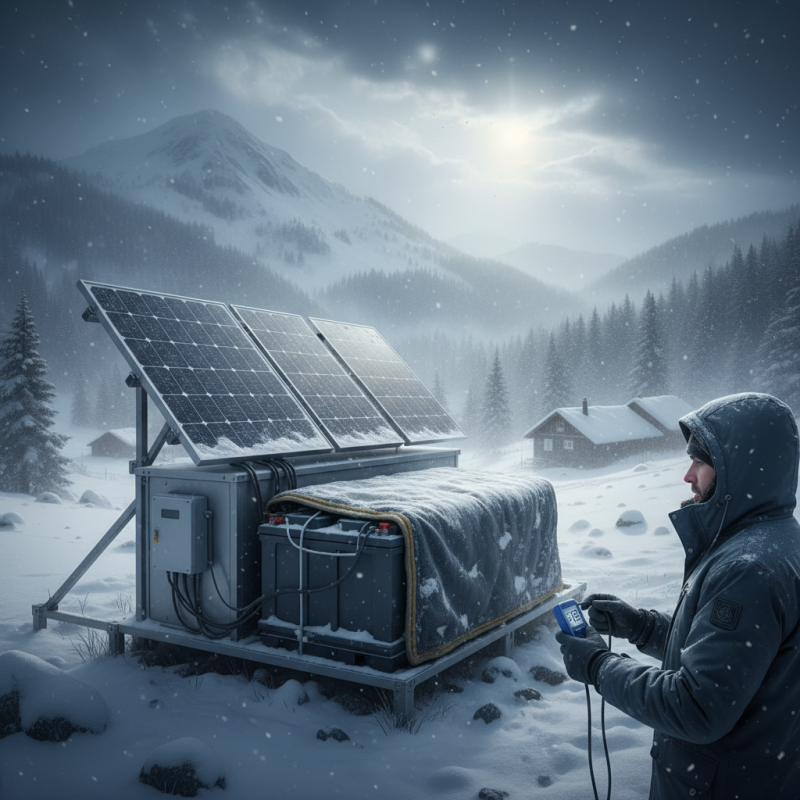
Cold weather significantly affects the performance of solar batteries. As temperatures drop, chemical reactions within batteries slow down. This results in a decrease in energy storage efficiency. Research shows that lithium-ion batteries experience a 20% drop in capacity at 32°F (0°C). Lower temperatures can increase internal resistance, making it harder for batteries to deliver energy.
Many users are unaware of how temperature limits battery efficiency. A study published by the National Renewable Energy Laboratory indicates that state-of-charge affects temperature performance. This is vital for homeowners relying solely on solar energy. Poor performance in winter months can lead to energy shortages or reliance on backup systems. Thus, regular monitoring becomes essential.
Tip: Insulate your battery storage environment. This keeps temperatures stable.
Another critical point involves maintaining an optimal charge level. Keeping batteries at a moderate state of charge can improve performance in cold conditions. Over-discharging or over-charging can lead to permanent damage, especially in low temperatures.
Tip: Regularly check battery levels.
With climate fluctuations becoming common, understanding this aspect of solar battery systems is crucial. It's an area that deserves more attention from users to enhance their overall energy independence.
: Cold weather reduces battery efficiency, especially in lithium-ion types. Capacity can drop by 20% at 0°C.
Energy output may decrease by up to 30% during harsh winter conditions. This affects energy storage.
Effective battery management adapts to temperature changes to maximize efficiency. Poor management can complicate usage.
Store batteries in insulated locations to help maintain temperature stability and reduce energy loss.
Keep charge levels between 20% and 80% to avoid irreversible damage from over-discharging.
Cold weather can cause fluid levels to drop and terminals to corrode, impacting overall performance.
Yes, battery warmers can support performance during extremely cold spells.
Collecting performance data helps anticipate winter challenges and informs better management strategies.
Foam insulation is effective for maintaining higher temperatures around battery units.
Yes, doing so can alert you when to take extra precautions for your batteries.
Solar batteries are essential for optimizing renewable energy storage, yet many users wonder, "Why do solar batteries perform worse in cold weather?" The performance of solar batteries is significantly influenced by temperature, primarily due to the chemical reactions that power these units. Cold weather can lead to reduced battery efficiency, limiting the charge and discharge cycles.
Extensive statistical analyses have shown that the efficiency of solar batteries drops in low temperatures, making it critical for users in colder climates to understand how different battery types respond to frigid conditions. A comparative study indicates that some battery chemistries outperform others, suggesting that selecting the right battery can mitigate cold weather challenges. To ensure optimal performance, employing best practices for solar battery maintenance in these environments becomes crucial, helping users maximize their solar energy systems year-round.

 Sliver Battery