How to Properly Charge a Solar Home Battery for Maximum Life?

Time:2026-05-09 Author:Sophia
0%

In today's world, an increasing number of homeowners are turning to solar power. With this shift, understanding how to charge a solar home battery properly becomes crucial. Renowned expert Dr. Emily Hart emphasizes, "Proper charging habits can enhance your battery's lifespan significantly."

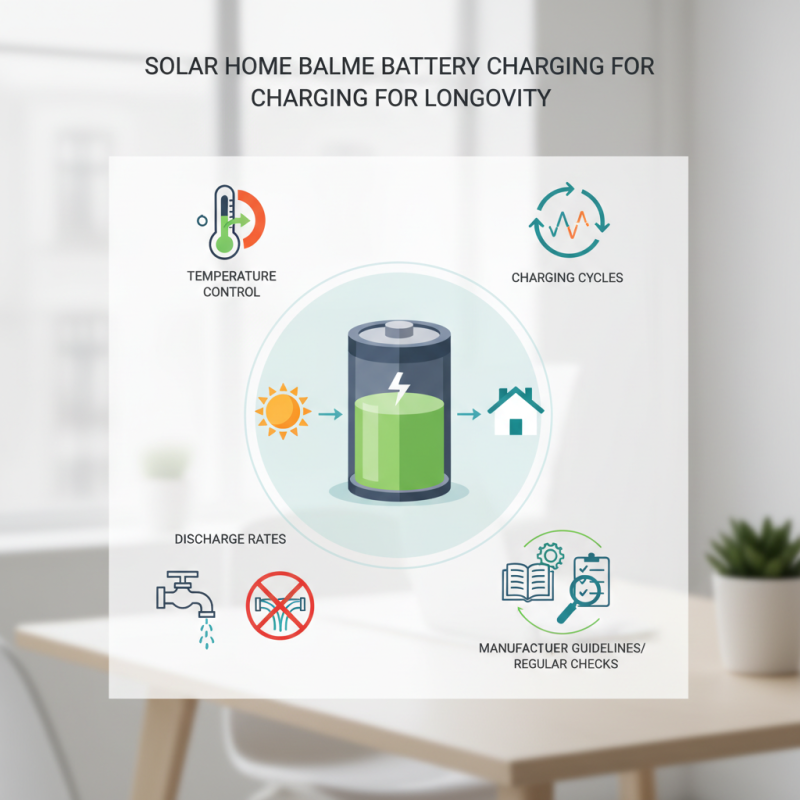
Each battery has its unique characteristics. Factors like temperature, charging cycles, and discharge rates play a role in efficiency. It's essential to monitor these aspects closely. Neglecting them can lead to premature battery failure. Always consider the manufacturer's guidelines. They offer valuable insights that are often overlooked.

Most users, however, underestimate the importance of regular checks. This oversight can diminish performance over time. Ensuring optimal charging conditions is vital. Simple practices, like maintaining correct temperature ranges, can yield significant improvements. Engaging with professionals can further solidify your understanding of effective charging techniques.
How to Properly Charge a Solar Home Battery for Maximum Life?

Understanding Solar Home Batteries and Their Charging Needs

Understanding solar home batteries and their charging needs is essential for optimizing their lifespan. These batteries store energy generated from solar panels. Proper charging methods can significantly affect performance.

Batteries require specific charge levels. Overcharging or undercharging can reduce their efficiency. Aim for a regular charge cycle. This typically involves charging at a consistent rate to maintain optimal health. Pay attention to temperature conditions. High temperatures can accelerate deterioration. If you notice any unusual signs, like swelling, it might be time to reevaluate your charging habits.

Tips: Monitor charge levels closely. Use a reliable battery management system. Regularly check connections for corrosion. Consider the time of day for optimal sun exposure. If your area has inconsistent weather, adjust your charging routine accordingly. This may involve more manual oversight or investing in monitoring tools. Regular maintenance can reward you with a longer-lasting battery.

Charging Cycles of Solar Home Batteries

This bar chart illustrates the charging cycles of solar home batteries over a week. Proper charging is essential to maximize battery life, ensuring the battery is charged to optimal levels without overcharging.

Optimal Charging Techniques for Solar Home Batteries

Charging a solar home battery correctly is essential for maximizing its lifespan. Optimal charging techniques are crucial for efficient energy storage and usage. Studies indicate that maintaining a battery charge between 20% and 80% can significantly extend its life. Batteries that are charged beyond 80% frequently may experience reduced capacity over time.

Consider keeping your system calibrated to the specific weather conditions. During sunny periods, charge your battery fully to utilize the excess energy. On cloudy days, slow down charging to avoid stress on the system. This balance allows for proper energy management while prolonging battery life.

Tips: Monitor the temperature of your batteries. Extreme heat can degrade battery components. Regularly check the charge cycles; too many full discharges can be damaging. Adopting these practices can enhance your battery's performance and longevity. Investing time in understanding these details pays off significantly over the years.

Maximizing Battery Life Through Proper Maintenance Practices

Maintaining a solar home battery is crucial for maximizing its lifespan. Regularly checking the battery's state of charge helps prevent over-discharging. Aim to keep the battery between 20% and 80% charged. Consistent monitoring reduces stress on the battery. This approach ensures longevity and consistent performance.


Temperature plays a significant role in battery health. Storing the battery in extreme temperatures can significantly shorten its life. Aim for a moderate environment. Ideally, keep the battery between 32°F and 95°F. Poor thermal management can lead to reduced capacity. This issue is often overlooked but is easily addressed with proper ventilation and insulation.


Routine maintenance checks are essential. Inspect connections and terminals for corrosion. Clean them regularly to ensure optimal conductivity. Listening for unusual sounds may indicate a problem. Documenting these observations can lead to early detection of issues, preventing costly repairs. Adopting these habits creates a reliable energy storage system.

Common Mistakes to Avoid When Charging Solar Batteries

Charging a solar home battery requires careful attention to detail. One common mistake is overcharging. This happens when the battery receives too much voltage, reducing its lifespan. It's crucial to monitor the charge level regularly. Installing a battery management system can help. This system prevents overcharging by disconnecting the battery when it reaches full capacity.

Another frequent error is ignoring temperature conditions. Extreme heat or cold can damage solar batteries. Charging in temperatures outside the recommended range can lead to inefficiency and potential failure. Always check the manufacturer's guidelines regarding the ideal charging temperature.

Neglecting regular maintenance is also a significant issue. Dust and corrosion can impede proper charging. Cleaning battery terminals and ensuring connections are tight can improve performance. Regularly inspect your battery and solar setup. Taking these simple steps fosters a healthier battery life. Be aware that mistakes happen. Learning from them can lead to more effective energy management.

Monitoring Battery Performance for Longevity and Efficiency

Monitoring battery performance is crucial for maximizing the life of a solar home battery. Proper care allows homeowners to avoid costly replacements. Start by regularly checking battery voltage and temperature. These measurements indicate the health of the battery. A significant drop in voltage can signal a deeper issue. Overheating can cause irreparable damage, so keep an eye on those readings.

Additionally, tracking the discharge and charge cycles can provide insight into efficiency. Note how much energy is consumed and replenished over time. This data can reveal patterns that impact lifespan. Using monitoring software can simplify this process. However, not every system is user-friendly. Some may overwhelm users with complex metrics. Reflecting on user accessibility can help improve overall usability.

Lastly, pay attention to charging habits. Avoid charging the battery to 100% or letting it drop too low. This balancing act is essential for longevity. Remember, even small changes can lead to significant improvements. Mistakes are part of the learning process. Continually assess and adjust to ensure optimal performance.

FAQS

: What should I monitor for maintaining battery health?

: Regularly check battery voltage and temperature for insight into its health.

How can overcharging affect my solar battery?

Overcharging can reduce the battery's lifespan significantly and cause inefficiencies.

What temperature conditions are ideal for charging?

Charge the battery within the manufacturer's recommended temperature range for best performance.

Why is maintenance important for solar batteries?

Regular maintenance prevents dust and corrosion, improving battery performance and longevity.

How can I track my battery's efficiency?

Keep a record of discharge and charge cycles to identify patterns affecting lifespan.

What mistakes can I make while charging?

Ignoring charge levels or extreme temperatures can lead to inefficiencies and damage.

Is it okay to fully charge my battery?

Avoid charging to 100% as it can impact the battery's long-term health.

How can I prevent overcharging?

Install a battery management system that disconnects the battery when full.

What tools can assist with monitoring my battery?

Use monitoring software, but ensure it's user-friendly to avoid confusion.

How can I improve my energy management?

Learn from mistakes and adjust charging habits for better performance and efficiency.

Conclusion

Properly charging a solar home battery is essential for maximizing its lifespan and efficiency. To achieve this, it's important to first understand the unique charging requirements of solar batteries, which differ from traditional batteries due to their reliance on solar energy. Employing optimal charging techniques, such as utilizing appropriate charge controllers and ensuring batteries are not overcharged, can greatly enhance their performance and longevity.

Additionally, regular maintenance practices play a crucial role in extending the life of solar batteries. These include routine inspections and cleaning of terminals to prevent corrosion, as well as monitoring the battery's performance to identify any issues early on. It's equally important to be aware of common mistakes, such as neglecting to use proper charging cycles or allowing batteries to discharge too low, which can adversely affect their health. By understanding how to charge a solar home battery properly and maintaining it diligently, you can ensure long-lasting and efficient energy storage for your home.

Sophia

Sophia

Sophia is a dedicated marketing professional with an exceptional depth of knowledge about her company's products and services. With a keen understanding of market trends and customer needs, she crafts insightful blog posts that not only inform but also engage readers, enriching the company’s online......